Blood Pressure Readers at the Pharmacy: What to Know Before You Buy
Picture this: you’re standing in the CVS pharmacy aisle at 9 p.m., looking at a shelf lined with a dozen blood pressure monitors. Or maybe you’re scrolling CVS.com at midnight, staring at a $20.99 manual cuff on one tab and a $79.99 Bluetooth upper-arm monitor on another. Many buyers select based on price and move on. For someone who just wants a baseline sense of where their numbers are, that works fine. But for anyone managing hypertension, heart failure, or kidney disease, that choice carries more weight than the sticker suggests.
If you’re shopping for a CVS blood pressure reader, this article answers two questions. First: which blood pressure monitor at CVS is actually worth buying for your situation? Second: at what point does a pharmacy device stop being enough for what your health actually requires? Those are different questions, and the honest answer to the second one matters more than most manufacturers will tell you. Some patients managing chronic conditions have moved past standalone monitors entirely, enrolling instead in connected programs where readings are reviewed by a licensed clinician. That distinction matters more than most price tags show, and the article returns to it directly after walking through what’s actually on the shelf.
What’s waiting for you in the CVS blood pressure aisle
CVS carries a broader range of blood pressure monitors than most people realize, spanning several brands, measurement methods, and price points. Knowing the full range of options before you buy prevents a frustrating return trip.
CVS-branded monitors: from manual to Bluetooth
The CVS house brand runs from basic to fully featured. At the low end is the Manual Blood Pressure Monitor at $20.99. Manual sphygmomanometers require auscultation technique and clinical training to use reliably, which makes them impractical for most solo home users. The Series 400W wrist monitor comes in at $49.99, and the Advanced Wrist model steps up to $59.99. Upper-arm options include the Upper Arm 400 Series ($59.99), the Series 600 ($64.99), and the Talking Upper Arm model ($66 to $70). The top of the CVS lineup is the Series 800 at $79.99: upper-arm, Bluetooth-enabled, connects to the CVS Health app, stores 120 readings per user for two users, and accommodates cuffs from 8.7 to 16.5 inches.
ExtraCare Plus members receive discounts on most of these models, the Series 600, for example, drops from $64.99 to $51.99 with that membership, which changes its value calculation considerably. Several CVS-branded models show pickup availability, which suggests they’re stocked in at least some physical locations, though CVS notes prices may vary from online to in-store.
Third-party brands CVS carries
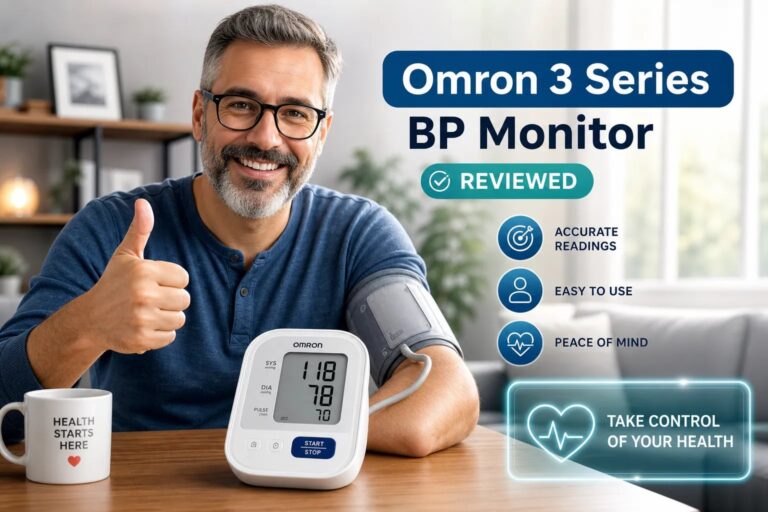
Beyond its house brand, CVS stocks SmartHeart monitors ranging from $19.99 to $63.99, including talking models and wide-range cuff versions. Mabis offers a wrist monitor at $24.99. The most clinically significant third-party options are the Omron series: the 3 Series, 5 Series, 7 Series, and 10 Series, along with the Omron Evolv, with wireless-connected models reaching up to $91.99. Microlife and HealthSmart round out the selection with both wrist and upper-arm options.
The Omron 10 Series and Omron Platinum are the names that appear in published clinical validation literature with documented accuracy data. Both carry wireless connectivity. If clinical performance is your primary criterion, these are the models worth comparing against CVS’s own top-tier options.
The price-to-feature reality
The price range across the full CVS selection runs from roughly $20 to $92. Manual cuffs at the low end require technique most home users don’t have. Mid-range digital upper-arm models handle daily monitoring well and are what most chronic-condition patients should be looking at. Bluetooth-connected models add the ability to log readings to an app, which can be useful for sharing data at appointments. What none of these tiers includes is a clinician who reviews your readings and follows up when something looks wrong. That gap matters, and the article returns to it directly in a later section.
Choosing a CVS Blood Pressure Reader: Upper Arm vs. Wrist
This is the most clinically important distinction in the entire buying decision, and the packaging rarely explains it clearly. The section below breaks it down, and explains why the device type matters far more than most shoppers expect when comparing a blood pressure reader from CVS.
Why upper-arm monitors are the clinical standard
Upper-arm cuffs measure pressure closer to heart level and are far less sensitive to positioning errors during measurement. Major cardiovascular and hypertension guidelines consistently point to validated upper-arm devices as the first-line recommendation for home blood pressure monitoring. For a patient tracking trends over weeks or months to understand how medications are working, the consistency of an upper-arm device is as important as the accuracy of any single reading.
Where wrist monitors fall short in real-world use
Peer-reviewed research is direct on this point. A study published in Hypertension found that wrist readings at home ran approximately 5.6% higher systolic and 5.4% higher diastolic than upper-arm readings, with many participants showing errors exceeding 5 mmHg or 10 mmHg. Other research places the average overestimation from wrist monitors at 8 to 10 mmHg. The reason is mechanical: wrist monitors are extremely sensitive to the height of your wrist relative to your heart and to subtle angle changes during the measurement. A user who is even slightly off position gets a reading that looks elevated when it may not be.
One published comparison of wrist versus upper-arm home measurement found only moderate agreement for hypertension classification between the two methods, with a Cohen’s kappa of 0.58. That number means meaningful disagreement. For a patient making decisions about medication or calling their doctor, that margin of error is not acceptable.
When a wrist monitor might be acceptable
Portability is the one practical advantage wrist monitors have. If an upper-arm cuff genuinely cannot fit due to a very large or muscular upper arm, a wrist device from a validated manufacturer can serve as a backup. The condition is non-negotiable: compare its readings directly against your clinic’s measurement before you trust it for home use. If the numbers don’t align, don’t use it for clinical decisions.
Cuff sizing: the spec most people overlook
Most buyers focus on price and brand. Cuff fit is what actually determines whether the reading is usable. A cuff that doesn’t fit correctly gives wrong numbers, regardless of how sophisticated the monitor is.
How to measure your arm correctly
Measure the circumference of your bare upper arm at the midpoint between your shoulder and elbow. Standard adult cuffs typically fit arms from 9 to 13 inches (22 to 32 cm). Large adult cuffs cover approximately 13 to 17 inches (33 to 43 cm). A cuff that is too small inflates against less tissue and reads artificially high. A cuff that is too large can produce falsely low readings. Neither error is harmless when you’re tracking blood pressure for medical reasons.
Which CVS monitors accommodate wider arms
The CVS Series 800, Series 600, and Talking Upper Arm all list a cuff range of 8.7 to 16.5 inches (22 to 42 cm), which covers the majority of adult arms, including larger circumferences. The SmartHeart Talking Arm model and the Trackstar wide-range model also specify a wide-range cuff. For patients with very large upper arms, confirm the listed maximum before purchasing rather than assuming a standard cuff will work. This information is on the product page, not always on the box, so check before you get home.
How CVS-branded monitors hold up in independent accuracy tests
The box won’t tell you this, but the peer-reviewed literature will. Here’s what independent testing actually shows about CVS monitor accuracy.
What the validation data shows for the CVS Series 800
A 2022 validation study tested five home blood pressure monitors against the ISO 81060-2:2018 standard. The CVS Series 800 did not meet the standard. Its mean systolic difference was 5.9 mmHg, which exceeded the acceptable threshold for the ISO protocol. In the same study, both the Omron 10 Series and the Omron Platinum met the ISO standard for a general adult population. These results don’t make the CVS Series 800 useless for home use, but they do mean its readings are better understood as trend indicators than clinically precise measurements.
What other independent reviews say
One consumer-testing review of the CVS Series 800 gave it an overall score of 84 out of 100, scoring 90 for ease of use but noting that accuracy fell behind the Omron Platinum in peer-reviewed comparison. For the CVS Advanced Wrist monitor, verified user reviews tell a more divided story: some users reported readings within 1 to 2 mmHg of a clinic measurement, while others reported systolic errors exceeding 40 mmHg. That variance illustrates something important. Wrist monitor accuracy is not just brand-dependent; it is technique-dependent. Even a device that performs adequately in controlled conditions can produce wildly inaccurate readings when wrist position is even slightly off.
Where CVS monitors are good enough, and where they aren’t
For a healthy adult who wants occasional awareness of their blood pressure trend, mid-range CVS upper-arm models are reasonable tools. For a patient managing hypertension, tracking their medication response, or living with a condition like chronic kidney disease or heart failure, a 5 to 10 mmHg validation gap has real clinical consequences. That population needs more than trend tracking, and that’s where the choice of device becomes a clinical decision, not just a consumer one.
Features that actually help you track blood pressure at home
Spec sheets are full of numbers that look impressive without changing your actual experience much. Three features stand out as ones that genuinely matter when comparing any CVS blood pressure reader.
Memory and multi-user storage
Memory matters if you’re comparing readings over days or weeks, or sharing the monitor with a partner. The CVS Series 800 and Series 600 both store 120 readings per user for two users, totaling 240 readings. The Talking Upper Arm model stores 100 per user. For a single person taking two readings per day, 60 readings covers roughly a month; 120 covers two. Beyond that, you’re scrolling a history most people never review. If you take readings twice daily and want to share a 30-day log with your doctor, 60 slots is a functional minimum.
Bluetooth and app connectivity
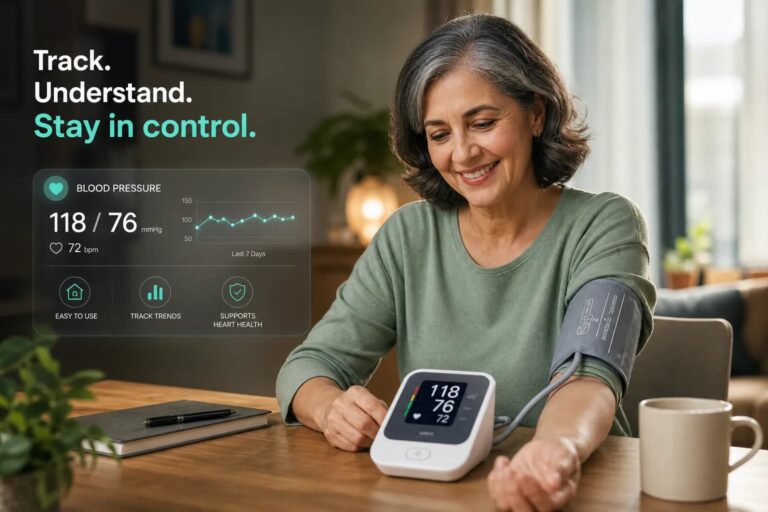
The CVS Series 800 connects to the CVS Health app via Bluetooth, as do several Omron models. For patients who want a digital log they can bring to an appointment rather than a handwritten notepad, Bluetooth sync is genuinely convenient. The important caveat: app-connected is not the same as clinician-connected. Your readings sync to your phone, not to your care team’s chart. You still have to remember to pull up the data at your next visit, and nothing happens automatically if a reading looks dangerous at 2 a.m.
Talking monitors and accessibility features
The CVS Talking Upper Arm and several SmartHeart Talking models read results aloud after measurement. For patients with low vision, reading difficulties, or anyone who finds squinting at a small display unreliable, this feature has real practical value. For older adults monitoring blood pressure alone at home, a device that speaks the number clearly removes one source of error from the process. This is a genuine accessibility feature, not a marketing add-on.
Choosing the right CVS blood pressure reader for your situation
Three clear picks, based on three different use cases.
Best budget pick for general awareness
SmartHeart upper-arm models in the $21 to $25 range are a reasonable starting point for someone who wants occasional awareness and has already confirmed through a clinic visit that their blood pressure is in a normal range. These devices are not clinically validated to the level of Omron’s top-tier models, but for trend awareness in a low-risk patient, they serve the purpose at a fraction of the cost. Upper arm, not wrist, even in this category.
Best overall CVS-brand option
The CVS Series 600 upper arm at $64.99 ($51.99 with ExtraCare Plus) hits the practical sweet spot: a wide-range cuff from 8.7 to 16.5 inches, two-user memory with 120 readings per user, and a clear digital display without the Bluetooth complexity that adds cost without adding clinical value for most users. For a household where two adults need to monitor blood pressure and want to keep a two-month rolling record, this is the most sensible in-house brand choice available at CVS.
Best clinically validated option at CVS
The Omron 10 Series Wireless Upper Arm, available through CVS.com, passed the ISO 81060-2 validation standard in published testing where the CVS Series 800 did not. At approximately $91 to $92, it costs more, but for a patient whose doctor is actively monitoring blood pressure response to medication, a device with published validation evidence produces more reliable data. The wireless sync to the Omron Connect app also makes sharing a logged reading history at appointments straightforward rather than dependent on memory.
What no pharmacy blood pressure monitor can do for you
This is the part the box doesn’t address, and it’s the most important section for anyone managing a chronic condition.
Readings stay in your device, not with your doctor
Every blood pressure cuff sold at CVS, regardless of price, delivers data to one place: you. Bluetooth models extend that to your phone app. That is still not your doctor’s chart, and it is still not a clinician’s inbox. For a patient managing Stage 2 hypertension or recovering from a cardiac event, a reading that says 165/100 at 2 a.m. sits in an app until the next scheduled appointment, which might be days or weeks away. No alert reaches a clinician. No one reviews the medication. No one calls. The device records; it does not respond.
The window between visits is where things go wrong
Hospitalization data for heart failure patients consistently shows that deterioration happens between visits, not during them. The same pattern applies to uncontrolled hypertension in patients with kidney disease: damage accumulates in the intervals when no one is watching. A home monitor gives you visibility, but visibility without clinical follow-through is only half of what chronic disease management actually requires. This is not a criticism of CVS or any specific device. It is a structural limitation of any standalone monitor, regardless of brand or price point.
When a connected monitoring program does more than a device alone
How remote patient monitoring programs work
A remote patient monitoring (RPM) program provides a clinically validated connected device as part of an active care relationship, not as a product you set up on your own. The device transmits readings automatically through a secure connection. A licensed clinician reviews that data regularly and receives alerts when readings fall outside personalized thresholds set for that specific patient. A blood pressure spike at 2 a.m. is seen the next morning by someone qualified to act on it. That is a structurally different situation than a reading sitting in a phone app until you remember to mention it at your next visit.
Under Medicare, remote patient monitoring has been a covered benefit since 2018. For 2026, Medicare reimburses approximately $21.71 for the initial setup (CPT 99453), $47 to $52 per month for device supply and data transmission (CPT 99454), and approximately $51.77 per month for the first 20 minutes of clinical management (CPT 99457). For eligible patients, that means the monitoring program and the device can be covered without out-of-pocket costs for the hardware itself.
What RemoteHCS provides that a CVS monitor does not
RemoteHCS enrolls patients in a HIPAA-compliant, Medicare-compatible monitoring program where a clinically validated blood pressure device is provided as part of enrollment. Patients don’t shop for a monitor, evaluate accuracy studies, or configure app connectivity. Readings are automatically transmitted and reviewed by licensed clinicians, with escalation protocols in place when readings indicate a dangerous trend. For patients managing hypertension alongside conditions like heart failure, chronic kidney disease, or diabetes, this is a fundamentally different level of care than a standalone pharmacy device provides.
RemoteHCS is expanding enrollment across all 50 states, with a focus on the chronic conditions that require daily management rather than periodic checkups. The service is built specifically for patients whose care teams need consistent, clinically reliable data between office visits, not just a trend log that gets reviewed once every three months.
Who this approach is designed for
An RPM program through RemoteHCS is not the right answer for everyone. If you’re a healthy adult with confirmed normal blood pressure who wants occasional spot checks, a CVS upper-arm monitor handles that well. But if you are Medicare-eligible, managing one or more chronic conditions, and your physician has expressed concern about blood pressure control between visits, the real question isn’t which device is most accurate. The question is whether anyone qualified is actually seeing your numbers. That’s the problem a connected monitoring program is built to solve, and no Bluetooth app substitutes for it.
Bringing it back to the shelf
For most healthy adults, the CVS Series 600 upper arm is a practical, well-priced choice that covers the basics reliably. If clinical validation matters and price is secondary, the Omron 10 Series Wireless Upper Arm is the strongest performer available through CVS.com based on published accuracy testing. On a tight budget with low cardiovascular risk, a SmartHeart upper-arm model in the $21 to $25 range gets the job done for awareness purposes.
Avoid wrist monitors unless an upper-arm cuff genuinely cannot fit your arm. If you do use a wrist device, validate it against a clinic reading before relying on it for any health decision. The research on wrist monitor error is consistent and significant: a 5 to 10 mmHg average overestimation is not a rounding error for someone whose doctor is adjusting blood pressure medication based on home readings.
For patients actively managing hypertension, heart failure, chronic kidney disease, or other conditions requiring daily monitoring, the more important question is not which CVS blood pressure reader to buy. It’s whether a standalone device is the right tool at all. A connected RPM program through a service like RemoteHCS adds what no pharmacy monitor can: a licensed clinician who sees your readings, has the clinical context to interpret them, and can act on them before the situation becomes an emergency. That difference doesn’t appear on a price tag, but research on RPM programs documents measurable improvements in care process outcomes, more timely clinician review, earlier intervention on dangerous trends, and fewer gaps between readings and clinical action. If you’re in that category, the best next step isn’t choosing between monitors at CVS; it’s finding out whether you’re eligible for a program designed for exactly what you’re managing.