What Remote Patient Monitoring Does and Who Benefits Most
What does remote patient monitoring do that a standard clinic visit cannot? It closes the gap where chronic illness does its quiet damage. People managing ongoing conditions typically see their doctor only a handful of times each year, reasonable on the surface, but inadequate when blood pressure can spike overnight or glucose can trend out of control over two weeks. Subtle daily weight changes that signal early heart failure often go unnoticed until the situation becomes urgent. Remote patient monitoring (RPM) is the structured clinical service designed to catch those shifts in real time.
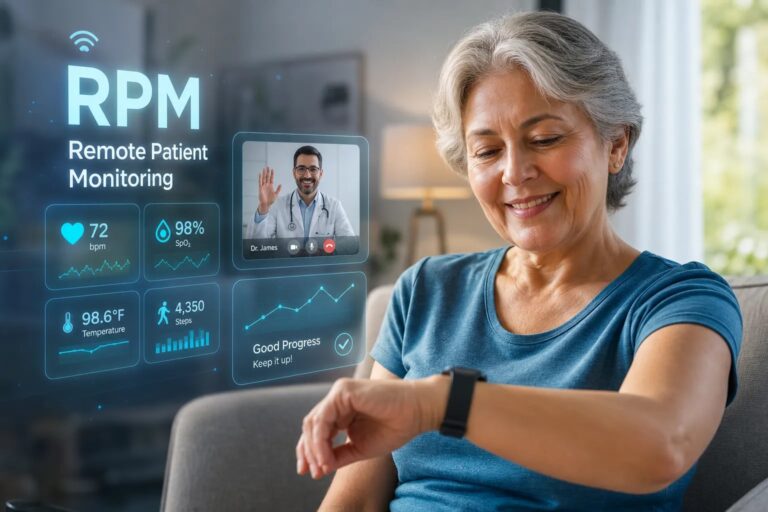
At its core, RPM brings physiological data from your home directly to your care team so they can track trends, catch warning signs, and act before a complication becomes a crisis. This is not a wellness app or a fitness tracker, it is a monitored clinical program with licensed clinicians reviewing your readings on a defined schedule.
RemoteHCS was built specifically for this purpose. Where general telehealth platforms focus on on-demand urgent care, RemoteHCS is a condition-specific monitoring program designed for patients managing ongoing illness day after day. This article walks through how RPM works, which devices are involved, who benefits most, what the evidence actually shows, and what Medicare covers, so you can decide whether it is the right fit for you or someone you care for.
What does remote patient monitoring do? Core functions in real clinical care
RPM is not a passive data collection exercise. It is a four-part clinical workflow: automated measurement, secure transmission, clinical review and trend interpretation, and treatment adjustment or escalation when readings drift into dangerous territory. Each step depends on the ones before it, and the point of the whole system is what clinicians do with the data, not the data itself.
That distinction matters. A reading sitting unreviewed in a database does nothing for a patient. RPM’s clinical value comes from attaching licensed eyes to that data on a regular cadence, so trends that would otherwise go unnoticed get flagged and addressed before they result in an emergency room visit or hospitalization.
How data collection and transmission actually work
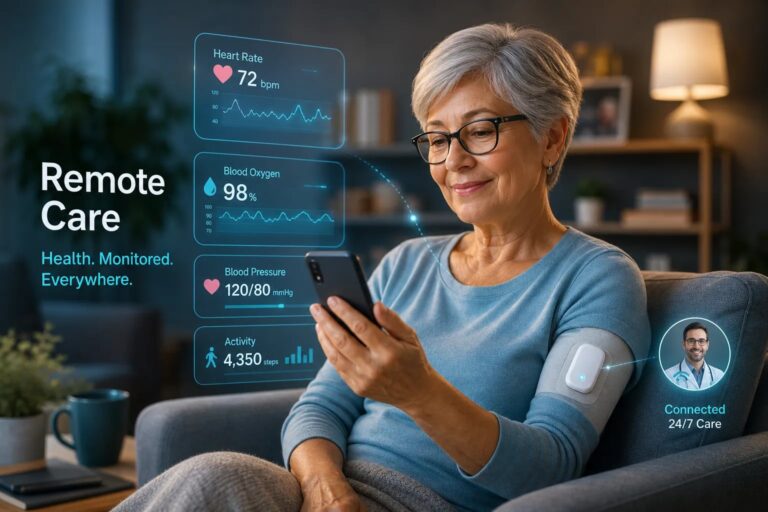
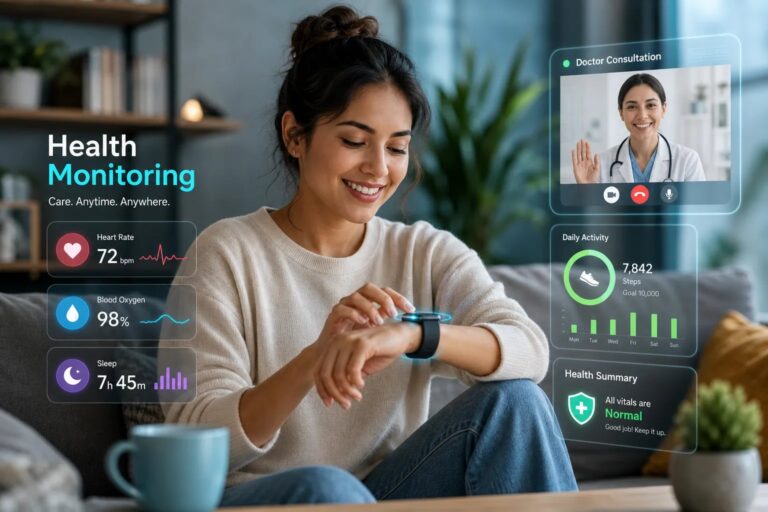
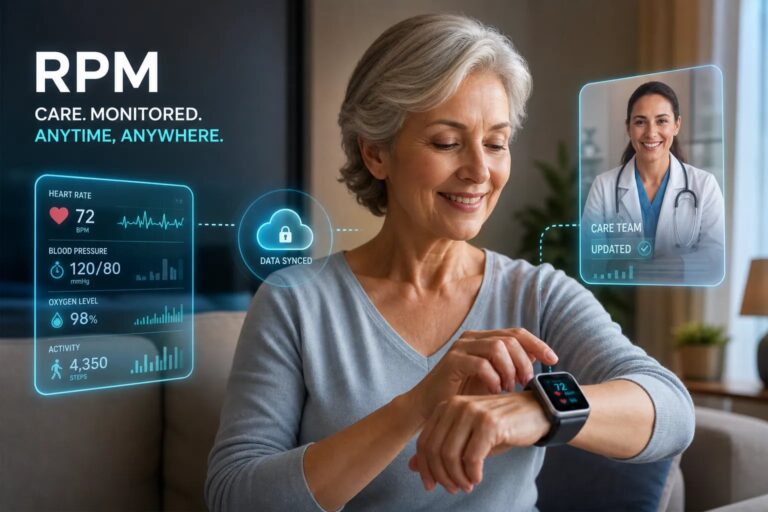
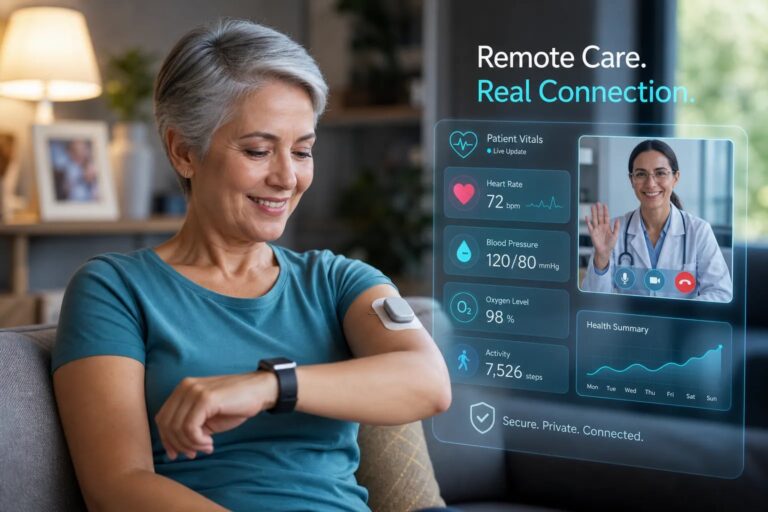
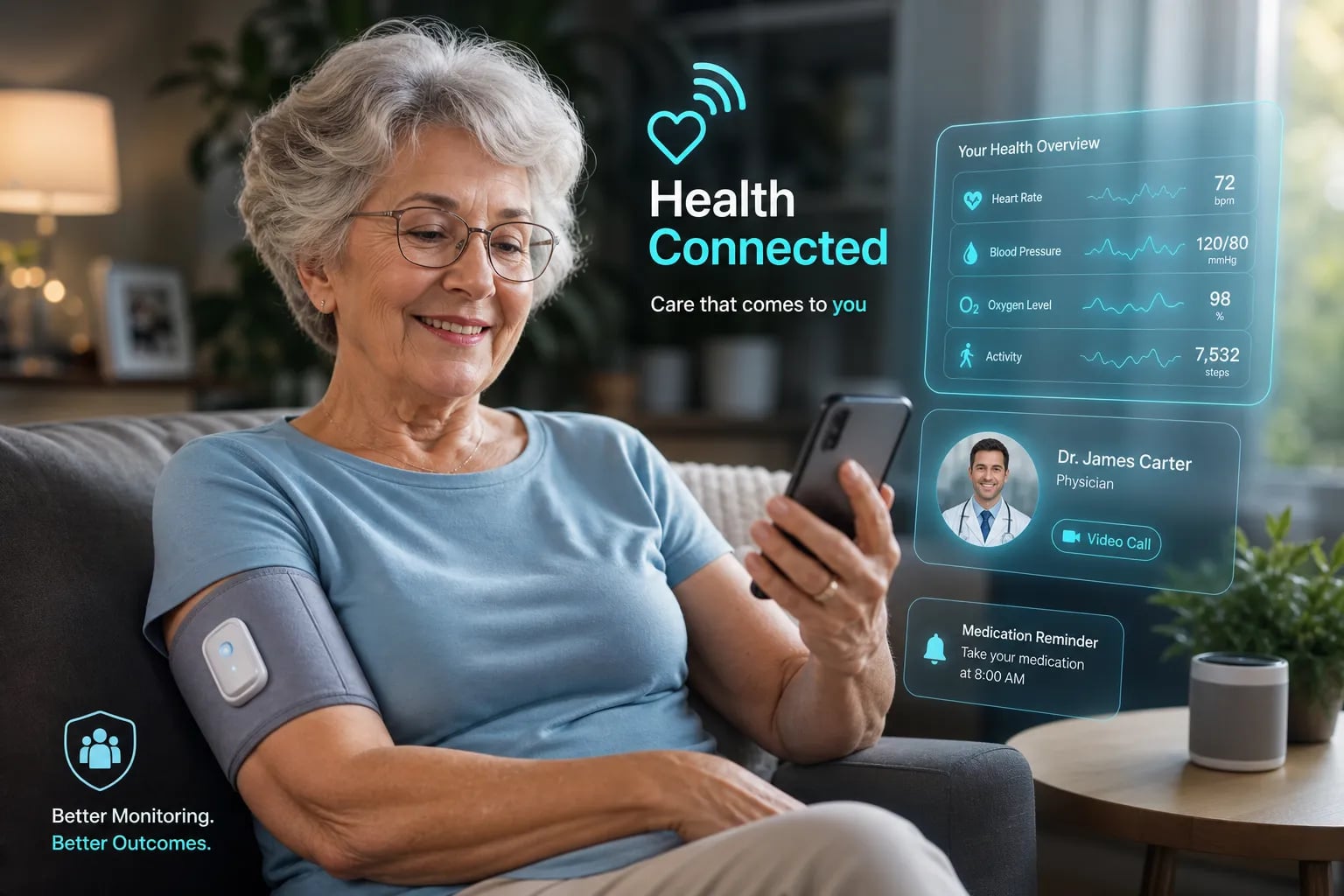
The basic loop works like this: you take a measurement at home using a connected device, the reading transmits automatically to a secure platform, and your care team reviews it. In well-designed programs, patients do not manually log readings or navigate complex software. The device handles the transmitting, and clinicians receive the data in a structured dashboard built for clinical review.
Automatic transmission is not a convenience feature, it is a clinical quality requirement. Medicare’s billing framework for RPM specifically requires that devices transmit data electronically and automatically. Patient self-entry alone does not satisfy the standard.
What happens when a reading falls outside the safe range
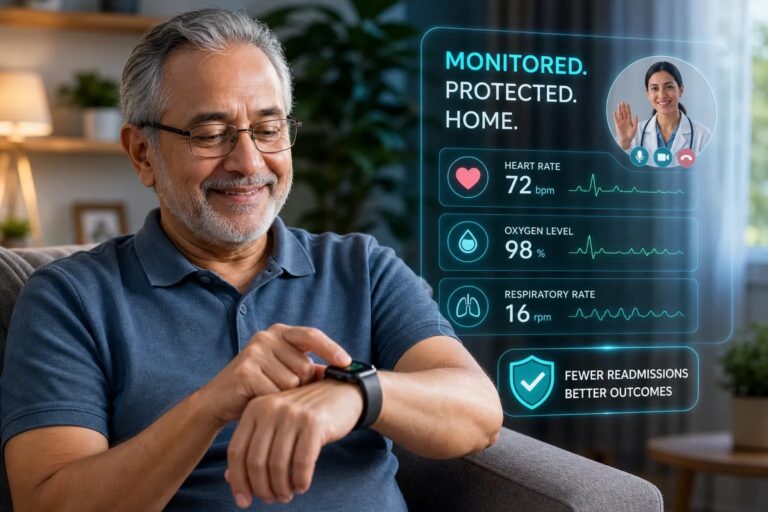
RPM platforms are configured with alert thresholds specific to each patient’s condition and clinical history. When a reading crosses a threshold, the system flags it and prompts the care team to respond. That response might be a care coordinator calling to check in, a virtual consult with the supervising clinician, or a medication adjustment communicated through secure messaging.
This alerting and escalation function is where remote physiological monitoring earns its clinical value. Catching a blood pressure spike on day three of a trend is very different from hearing about it at a scheduled appointment three months later. For patients managing conditions like heart failure or hypertension, that difference can determine whether they end up in the hospital.
RPM devices and how readings travel from home to clinician
What at-home patient monitoring looks like in practice depends entirely on your condition, there is no single universal kit. A patient managing hypertension receives a connected blood pressure cuff. Someone managing diabetes may receive a glucometer or, in some programs, a continuous glucose monitor (CGM) for real-time glucose tracking.
Someone managing COPD typically receives a pulse oximeter to track oxygen saturation, and sometimes a spirometer to measure lung function. Heart failure patients often use a connected weight scale alongside a blood pressure cuff, since daily weight changes signal fluid retention before other symptoms appear.
The most widely used monitoring devices
The core device types in most RPM programs include connected blood pressure monitors, glucometers and CGMs, pulse oximeters, digital weight scales, and heart rate or ECG monitors. Each device maps to a specific physiological signal: blood pressure readings for hypertension and cardiovascular risk, SpO2 for respiratory conditions, glucose trends for diabetes management, and body weight as a proxy for fluid status in heart failure. The device a patient receives is selected based on their diagnosis, not handed out as a standard bundle.
Cellular vs. Bluetooth: why the transmission method matters
Cellular-enabled devices transmit readings directly over the cellular network without requiring a smartphone, an app, or a Wi-Fi connection. Bluetooth-based devices rely on a paired phone or home gateway to relay data to the provider platform. For older or less tech-comfortable patients, that distinction has a measurable impact on whether readings actually reach the care team consistently.
Deployment data from 65-and-older populations shows cellular device compliance running at 85 to 95 percent, compared to 55 to 70 percent for Bluetooth-based setups in the same demographic. Programs serving Medicare-age patients often prioritize cellular-first devices precisely for this reason, and it is a question worth asking any RPM provider before enrolling.
Which patients and conditions benefit most from RPM
RPM is not the right tool for every health situation, but for specific populations it genuinely changes outcomes. The conditions with the strongest evidence base and the clearest clinical rationale for daily monitoring are hypertension, heart failure, diabetes, COPD, and chronic kidney disease.
What remote patient monitoring does for chronic conditions: daily data that changes decisions
In hypertension, blood pressure varies meaningfully from day to day, and office readings often miss the full picture. In heart failure, even a modest overnight weight gain can signal early fluid retention, a shift that, if caught promptly, may be managed with a diuretic adjustment rather than a hospitalization. Clinical heart failure guidelines commonly reference daily weight monitoring as a key self-management tool for this reason. In diabetes, glucose trends over days and weeks inform medication and lifestyle decisions that a quarterly A1C alone cannot capture. In COPD, a gradual drop in SpO2 over several days often precedes an acute exacerbation.
RemoteHCS was designed with these patients in mind, particularly those managing more than one of these conditions simultaneously, where the stakes of missing an early warning are highest.
What remote patient monitoring does for post-discharge recovery
Research consistently identifies the 30 days following a hospital discharge as a period of sharply elevated readmission risk. RPM gives clinicians a real-time view of how recovery is progressing at home, between the discharge date and the first follow-up appointment. For post-operative patients and those recently stabilized after a cardiovascular event, this monitoring window functions as an active clinical safety net rather than a waiting period.
What the clinical evidence says about RPM outcomes
RPM’s track record on reducing hospitalizations and readmissions is solid, particularly in heart failure and hypertension populations. The data on direct cost savings is less uniformly quantified across studies, though the logic follows directly from reduced utilization.
Hospitalization and readmission reductions: what the numbers show
Published research has shown meaningful reductions in hospital utilization among RPM-enrolled patients. One large-scale study found a 59 percent reduction in average hospital admissions over six months among RPM participants. A meta-analysis of heart failure patients identified a 20 percent relative reduction in heart-failure-related hospitalizations. A separate heart failure cohort reported a 50 percent reduction in 30-day readmissions among RPM users compared to non-users. These figures are most consistent in heart failure and hypertension populations, where the physiological signals being monitored directly map to the conditions that drive admissions.
Quality of life, cost implications, and where evidence is still developing
Heart failure patients in RPM programs report modest but measurable improvements in quality of life, and some studies show reduced ICU use and shorter hospital stays when readmissions do occur. Cost savings follow logically from those utilization reductions, though financial figures are less consistently quantified across studies than the utilization outcomes themselves.
Not every randomized trial shows statistically significant results across all settings, program quality, patient selection, and how actively clinicians engage with the data are significant variables. That is exactly why choosing a purpose-built program with defined clinical workflows matters more than choosing one based on device features alone.
Medicare coverage, HIPAA compliance, and RPM billing basics
Medicare has covered RPM since 2018 through CMS, and the reimbursement structure is well-established. For eligible patients, coverage is meaningful: the four core CPT codes cover device setup, monthly device supply, and clinical management time, and they apply when the service meets documented medical necessity requirements.
How Medicare reimburses RPM through CPT codes
Here is how the four billing codes break down in practical terms. CPT 99453 covers initial device setup and patient education, billed once per episode of care (approximately $21.71 under the 2026 Medicare Physician Fee Schedule). CPT 99454 covers monthly device supply and requires at least 16 days of transmitted data in a 30-day period (approximately $52.11). CPT 99457 covers the first 20 minutes of clinical review and interactive communication per month (approximately $51.77), and CPT 99458 covers each additional 20-minute block (approximately $41.42). Only one practitioner can bill RPM for a given patient in a billing period, and the service must be tied to a documented clinical condition with a clear medical rationale for remote monitoring.
What HIPAA compliance means for your health data in an RPM program
HIPAA in the RPM context means your health data must be encrypted both in transit and at rest, access must be limited to authorized clinical staff, and any vendor handling your protected health information must have a signed Business Associate Agreement with the covered entity. Patients also have the right to know how their data is used and to whom it may be disclosed. Any RPM provider worth enrolling with should be able to demonstrate these safeguards clearly, not just claim them in marketing language. Ask any program you evaluate for documentation of their data security practices before you enroll.
How to evaluate an RPM provider and take your next step
Once you understand what RPM does, the practical question becomes: how do you judge whether a specific program is actually built to deliver on that promise? The evaluation comes down to clinical fit, compliance confidence, and patient experience.
Key questions to ask before enrolling in any RPM program
On clinical fit, ask whether the program specializes in your specific condition or whether it treats all patients with the same generic monitoring setup. On compliance, ask whether the program uses FDA-cleared devices, maintains HIPAA-encrypted data handling, and is Medicare-compatible with clear billing documentation. On patient experience, ask how device setup works, whether the devices are cellular or require a smartphone, and what the escalation process looks like when something falls outside your safe range.
Providers who cannot answer these questions specifically are a red flag. A program built as an add-on to a general urgent care telehealth platform is not the same as one designed from the ground up for chronic condition monitoring.
What enrollment in a condition-specific RPM program looks like
A well-structured onboarding process includes an eligibility and medical necessity review, device delivery with clear setup support, clinician assignment, and a straightforward explanation of your monitoring cadence and escalation process. You should know from day one who is reviewing your data, how often, and how they will reach you if something needs attention.
RemoteHCS is currently building toward full enrollment across all 50 states. If you are managing hypertension, heart failure, diabetes, COPD, or kidney disease, joining the waitlist now gives you a clear path to enrollment and a head start on understanding what to expect when services open in your state.
The gap is real, and RPM is built to close it
Chronic conditions do not pause between appointments. Blood pressure climbs, glucose drifts, fluid accumulates, and oxygen levels dip on their own schedule, not on yours or your doctor’s calendar. What remote patient monitoring does, at its best, is give care teams a continuous view of what is actually happening so they can intervene when it matters rather than react after the damage is done.
The evidence on reducing hospitalizations is strong, the Medicare reimbursement framework is established, and the technology to do this well, automatic transmission, clinical alerting, and genuine clinician engagement, is available now. For patients managing the conditions that drive the most avoidable hospital stays, the question is not whether RPM works. The question is whether the program you choose is purpose-built, HIPAA-compliant, and staffed by clinicians who treat monitoring as an active clinical service. That is exactly what RemoteHCS was designed to be. If that describes your situation or someone you care for, the waitlist is open and the next step is straightforward.
Frequently asked questions about remote patient monitoring
What does remote patient monitoring do, exactly?
Remote patient monitoring collects physiological data, blood pressure, glucose, weight, oxygen saturation, from connected devices in your home and transmits it automatically to a licensed care team. Clinicians review that data on a defined schedule, identify trends or warning signs, and take action when readings move outside safe ranges. The result is continuous clinical oversight between office visits, rather than periodic snapshots a few times a year.
Who is RPM best suited for?
RPM delivers the clearest benefit for people managing chronic conditions that require ongoing physiological monitoring, hypertension, heart failure, diabetes, COPD, and chronic kidney disease are the strongest evidence categories. It is also effective for high-risk patients in the 30-day post-discharge window following a hospitalization.
Does Medicare cover remote patient monitoring?
Yes. Medicare has covered RPM since 2018 through CMS using four CPT codes (99453, 99454, 99457, 99458) that cover setup, monthly device supply, and clinical management time. Coverage requires documented medical necessity and devices that transmit data automatically and electronically.
What devices are used in an RPM program?
Device selection depends on your condition. Common RPM devices include connected blood pressure cuffs, glucometers, continuous glucose monitors (CGMs), pulse oximeters, digital weight scales, and ECG monitors. Programs should select devices based on your specific diagnosis, not provide a one-size-fits-all kit.