Remote Patient Monitoring: What It Is and How It Works
Picture this: you leave your doctor’s office with a blood pressure reading that concerned both of you. The plan is to watch it closely. The next appointment is in three months. Between now and then, nothing, no data, no check-ins, no clinical eyes on what your body is doing every day. That gap, repeated across hundreds of thousands of patients managing chronic conditions, is exactly the problem that structured remote patient monitoring was designed to solve.
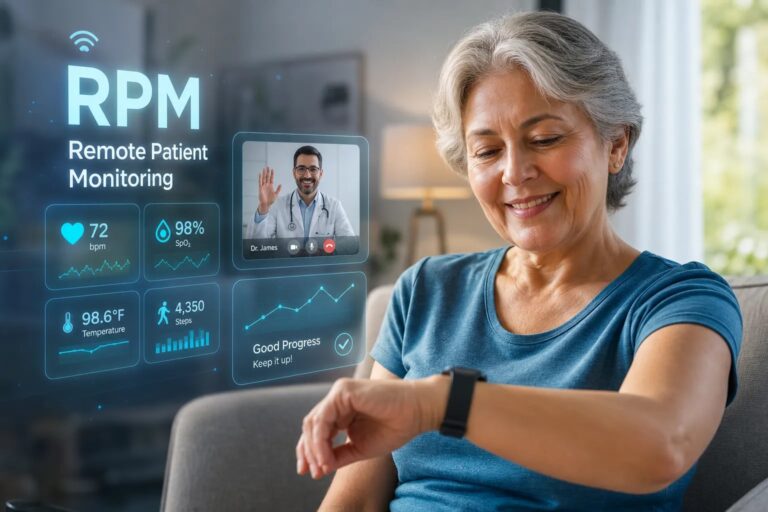
Remote patient monitoring, or RPM, is a care model where connected medical devices collect your health data at home and transmit it securely to a licensed clinical team who reviews it between visits. It is not a general wellness app or a consumer fitness tracker. It is a clinician-supervised system with real accountability built into every step, defined by clinical intent and meaningful oversight, not simply by the device category. Medicare has covered RPM services since 2018, and CMS expanded access further with updated billing rules in 2026, making it more accessible than ever for patients managing long-term conditions. RemoteHCS was built specifically around this connected health model, focused on chronic conditions that require daily attention rather than quarterly checkups. By the end of this article, you will know exactly what RPM is, who it is for, and what steps to take if it applies to you.
How remote patient monitoring actually works
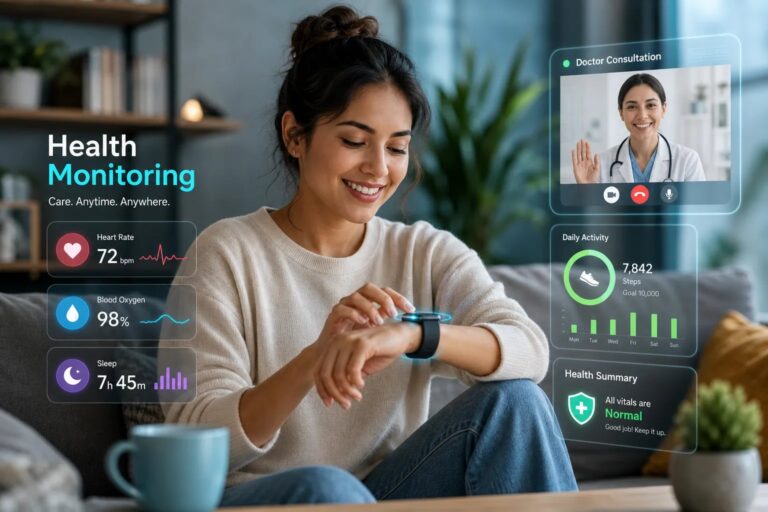
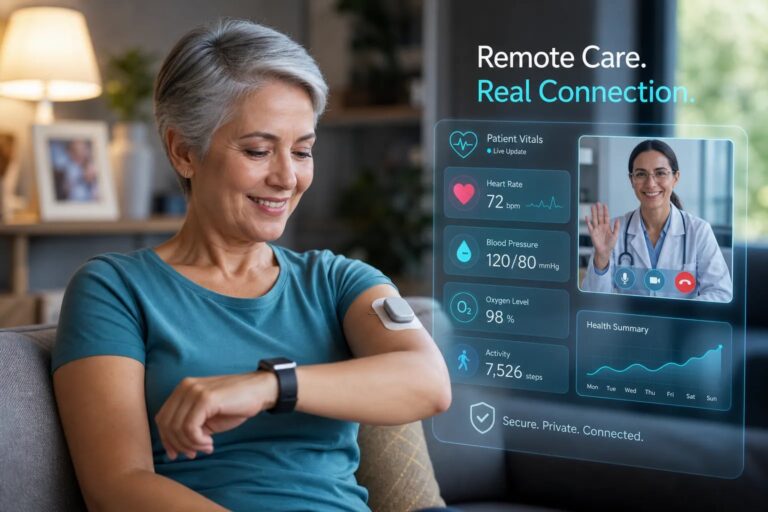
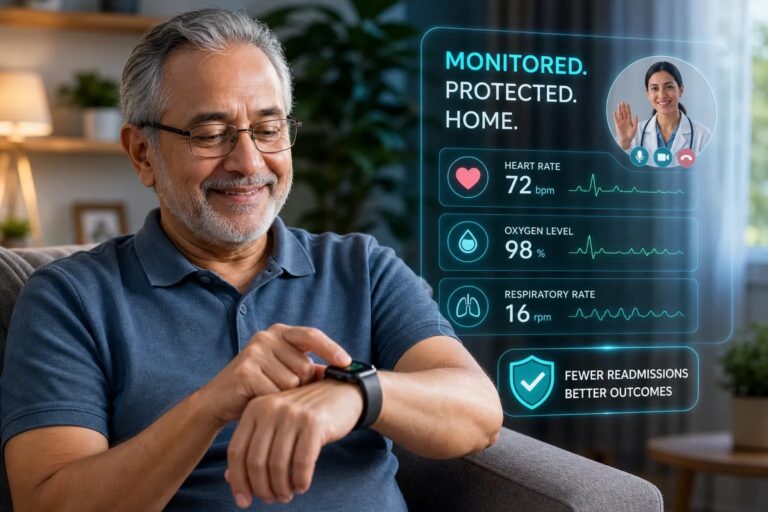
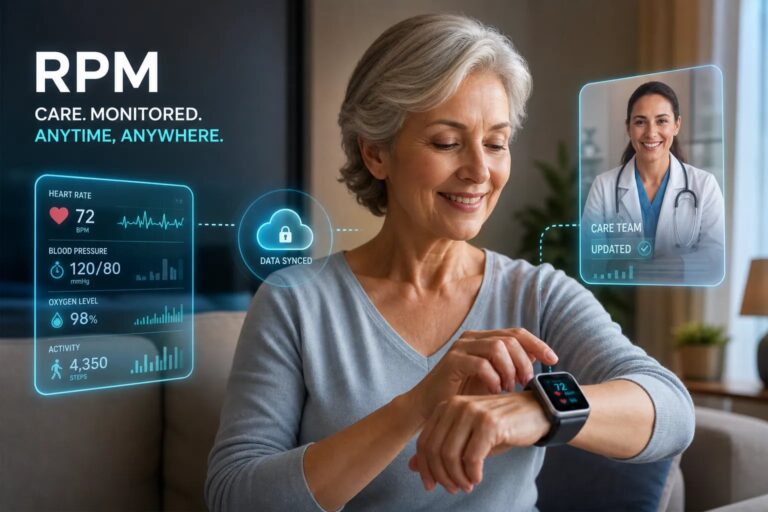
The mechanics are simpler than most people expect. You take a reading at home using a connected medical device; the device transmits that reading to a secure platform; a clinical team reviews the data and responds if anything falls outside your established range. This happens continuously, not just during a scheduled visit. The key difference between RPM and a regular wellness app is clinical oversight: a licensed practitioner is responsible for reviewing your data and acting on it.
Many high-quality programs operate on a daily monitoring cadence. That means your care team is not waiting for your next appointment to notice a trend. If your blood pressure spikes on a Tuesday morning, your coordinator knows by Tuesday afternoon, a speed of response that traditional quarterly visits cannot match, and one that can meaningfully change outcomes for patients managing conditions that shift quickly.
The devices that collect your data
RPM programs use FDA-cleared wearable medical devices and home monitoring equipment matched to your specific condition. The most common categories are:
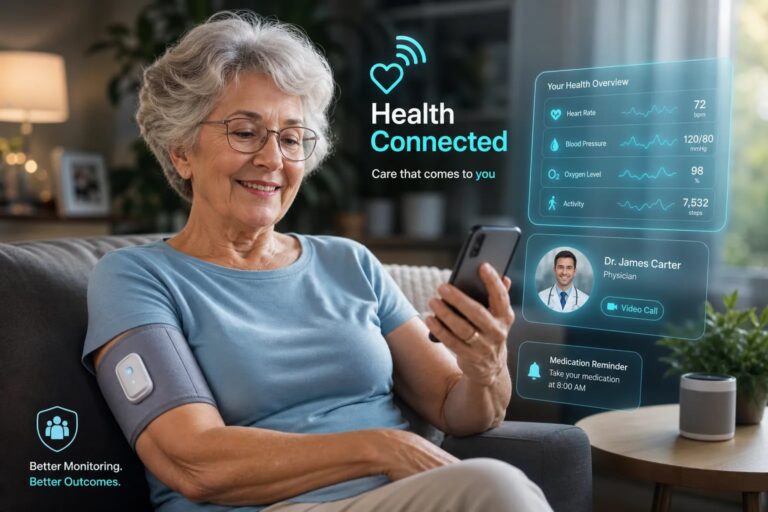
- Blood pressure cuff: measures systolic and diastolic pressure and pulse rate
- Blood glucose meter (glucometer): tracks blood sugar levels for diabetes management via intermittent readings
- Pulse oximeter: monitors oxygen saturation (SpO2) and heart rate
- Weight scale: captures body weight and fluid retention trends over time
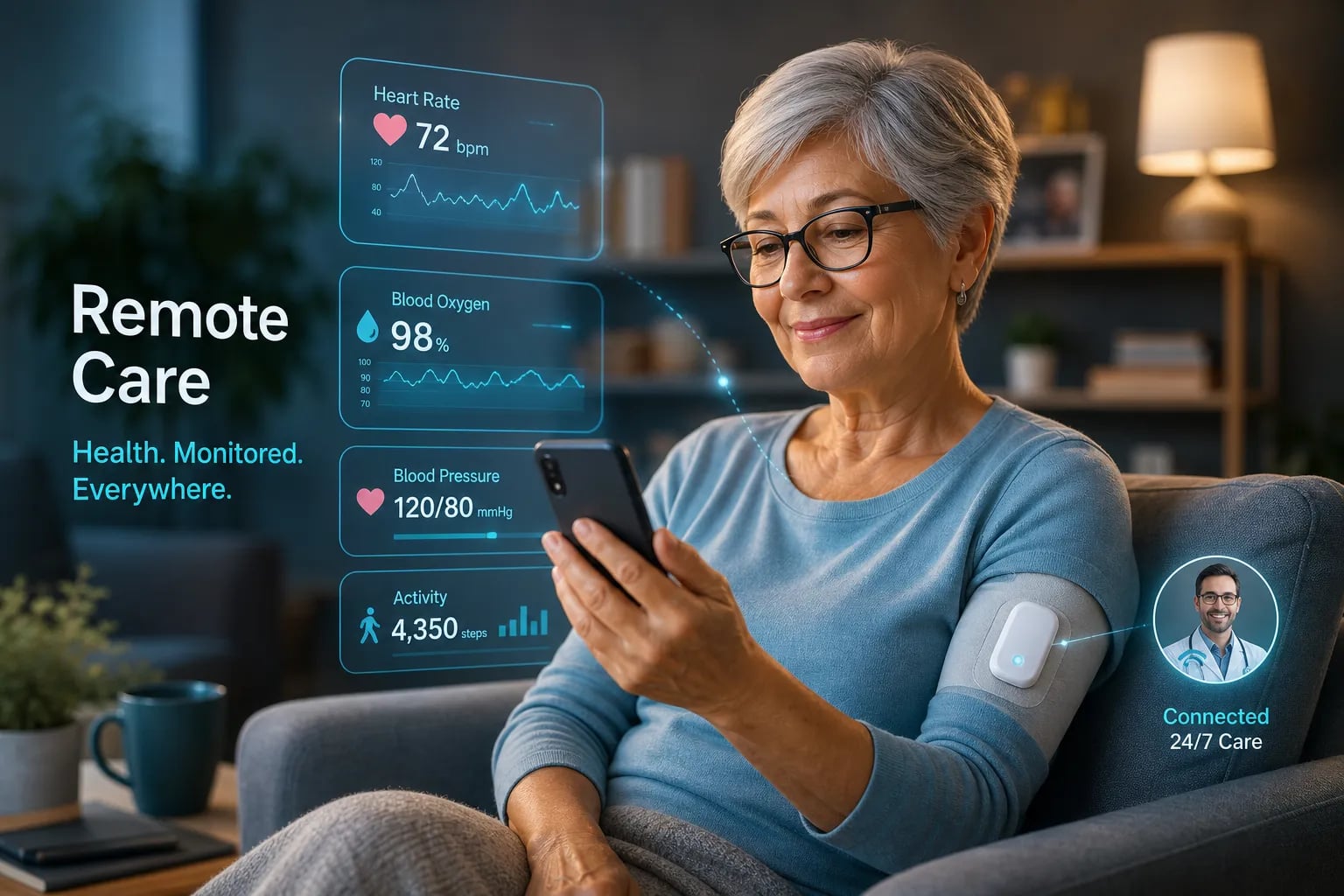
- Wearable or activity tracker: records steps, heart rate, and sleep patterns
Your care team selects the device based on your diagnosis, not a generic kit. A COPD patient needs a pulse oximeter. A heart failure patient needs a weight scale. A diabetes patient needs a glucometer. The device selection is clinical, not commercial.
What happens after your device records a reading
Once you take a reading, the data moves through an encrypted transmission to a HIPAA-compliant platform. A care coordinator or clinician reviews incoming readings, typically on a daily schedule. If your numbers fall within your personal thresholds, nothing happens on your end. If a reading triggers an alert, your care team reaches out directly. You are not monitoring yourself alone; the clinical team is monitoring alongside you.
How your privacy is protected throughout
RPM platforms are required to protect your health information under HIPAA. Data travels via TLS-secured encrypted transmission and is stored with equivalent encryption at rest. Every vendor handling your information must sign a Business Associate Agreement, and your protected health information is safeguarded under HIPAA’s permitted disclosure rules, meaning it cannot be sold and can only be shared for treatment, payment, or healthcare operations as the law allows. Your health data belongs to you, and a well-built RPM program treats it that way at every step.
Who remote patient monitoring is built for
RPM is not for every patient. It is specifically designed for people who need continuous oversight between visits, not just those who are acutely ill. If you are managing a condition that changes day to day, this is the care model built around your reality. And for patients who face real barriers to frequent in-person visits, that distinction matters even more.
Chronic conditions RPM manages best
The clearest clinical applications are conditions where a single quarterly reading gives your doctor an incomplete picture:
- Hypertension: daily readings catch dangerous spikes long before a crisis develops
- Type 2 diabetes: regular glucose data lets your team adjust your regimen between appointments
- Heart failure: weight and SpO2 trends reveal fluid buildup before it becomes a hospitalization
- COPD: pulse oximetry tracks oxygen levels when you are not in the pulmonologist’s office
- Chronic kidney disease: renal metrics and weight monitoring give nephrology teams the data they need between labs
Each of these conditions can change faster than a quarterly appointment schedule allows. Remote patient monitoring gives your care team an early warning system that periodic visits alone cannot provide.
Patients who gain the most from home health monitoring
Beyond diagnosis, certain life situations make RPM especially valuable. Medicare-eligible seniors managing one or more chronic conditions often find that travel to frequent appointments is difficult on a fixed income. Patients in rural or underserved areas may have limited access to specialists, making the distance to a clinic a real barrier. People with mobility challenges due to COPD, obesity, or disability face the same friction. Caregivers who help manage a family member’s health often carry significant anxiety about what happens overnight or between visits. RPM gives each of these groups a clinical team actively watching the data, not just waiting for the next appointment.
What the clinical evidence shows about RPM outcomes
Remote patient monitoring has been studied in randomized controlled trials and large systematic reviews, and the evidence is strongest for heart failure. A 2025 systematic review covering 15 studies found that RPM reduced heart-failure-related hospitalizations with a pooled relative risk of 0.80, roughly a 20% reduction in HF hospital stays compared to usual care. A separate meta-analysis of randomized controlled trials found lower mortality (OR 0.81) and lower risk of a first heart failure hospitalization (OR 0.78) versus standard care. These effect sizes translate to meaningful differences for real patients over time. (Readers seeking the full study details, including journal citations and DOIs, can request them through our clinical resources page.)
The TIM-HF2 trial (Tele-HF II, The Lancet, 2018) was the first large randomized trial of non-invasive multiparameter telemonitoring in heart failure to show a statistically meaningful reduction in days lost to unplanned cardiovascular hospitalization and all-cause death. That result matters because it established structured, clinician-supervised RPM as clinically meaningful, not just convenient. Not every RPM design produces identical results, which is exactly why program structure and clinical oversight are not optional features.
For type 2 diabetes, a 2021 meta-analysis by Lee and colleagues (Journal of Medical Internet Research) and several subsequent systematic reviews show RPM is associated with meaningful HbA1c improvements, with pooled reductions ranging from 0.28% to 0.55% versus usual care, results that strengthened when monitoring was paired with active coaching and care management. For COPD and hypertension, the evidence base is still developing. The clinical rationale is well-supported: daily oxygen readings can flag COPD flares earlier, and daily blood pressure data surfaces hypertensive episodes that a three-month appointment window would miss. But readers should understand these as mechanistic arguments backed by early evidence rather than outcomes proven at the same trial level as heart failure data.
Medicare coverage and what RPM costs you in 2026
Medicare has covered RPM since 2018 under CMS rulemaking, and the agency updated its billing framework in the 2026 Medicare Physician Fee Schedule final rule to expand access by lowering the thresholds required to qualify for both supply and management codes. For patients on traditional Medicare Parts A and B, RPM services are generally covered with standard Part B cost-sharing: 20% coinsurance after your deductible applies, consistent with CMS Part B guidelines. Many Medicare Advantage plans also cover RPM. Always verify your specific plan before enrolling, since individual plan terms vary.
How CMS bills for remote monitoring in 2026
The billing structure is built around device supply and clinical management time. Here is what each code represents in practical terms, based on 2026 Medicare Physician Fee Schedule national averages:
- 99453 (~$21.71): initial device setup and patient education, billed once at enrollment
- 99445 (~$47.00): new 2026 code covering device data supply when readings are collected 2 to 15 days in a 30-day period
- 99454 (~$47.43): device data supply when readings are collected 16 or more days in a 30-day period
- 99470 (~$26.00): new 2026 code covering the first 10 minutes of clinician management time per month
- 99457 (~$51.77): covers the first 20 minutes of clinician management time per month
- 99458: covers additional management time beyond the primary code
Note: reimbursement amounts reflect national averages and are subject to geographic adjustment. Confirm current rates with your provider or by reviewing the CMS Physician Fee Schedule lookup tool. The 2026 changes are meaningful for patients: the new 99445 and 99470 codes recognize shorter monitoring periods and lower management time thresholds, which means more patients can qualify for covered RPM services even if their monitoring data is collected for fewer days per month.
What separates a trustworthy RPM provider from the rest
Not all RPM programs are built the same. Some are bolted onto general telehealth platforms as an afterthought. Purpose-built providers focus exclusively on chronic condition monitoring from the ground up. The difference shows up in daily operations, data security, and whether a licensed clinician is actually reviewing your readings, or whether alerts pile up unreviewed for days before anyone acts.
The standards a legitimate RPM provider must meet
When evaluating any RPM provider, these are the non-negotiables. HIPAA compliance means encrypted data transmission and storage, signed Business Associate Agreements with every vendor touching your health information, and data handling that meets federal disclosure requirements. Medicare compatibility means CPT code-aligned billing, licensed practitioners, and documented care plans. Beyond those foundations, look for condition-specific device selection over generic wellness kits, a daily review cadence rather than weekly batch processing, and clinicians licensed in your state, since telehealth remote monitoring licensure requirements vary by jurisdiction and are a meaningful compliance consideration.
How RemoteHCS was built around these standards
RemoteHCS focuses on the chronic conditions that require daily management: diabetes, hypertension, heart failure, COPD, and kidney disease. The service is designed around HIPAA-compliant data handling, Medicare-compatible billing, and condition-specific device matching. Rather than offering on-demand urgent care, RemoteHCS is structured for ongoing, daily-cadence monitoring with real clinical oversight between visits, the model the evidence supports. The company is building toward a national footprint and is currently accepting early waitlist registrations ahead of its full launch. You can join through the RemoteHCS website.
How to get started with remote patient monitoring
The enrollment process is simpler than most people expect. You do not need to switch doctors or give up your current care team. RPM works alongside your existing care, adding daily oversight between your scheduled appointments rather than replacing them.
What the enrollment process looks like
- Connect with an RPM provider or ask your primary care physician if they offer remote monitoring
- Complete a health intake to confirm your condition qualifies and identify the right device
- Receive your connected device by mail with setup instructions included
- Your care team activates your account and establishes your personal monitoring thresholds
- You take readings at home on a consistent schedule; your care team monitors and reaches out when needed
RemoteHCS offers an early waitlist for patients who want to get started, with priority given to chronic condition patients who are already Medicare-eligible. Joining does not require a commitment, just an expression of interest.
What the first 30 days of remote monitoring actually feel like
The first month is primarily about establishing your personal baseline. Readings may not trigger outreach unless something falls outside your individual threshold, so do not interpret silence as inattention. By day 30, your care team has enough data to identify real trends, make clinical observations, and adjust your monitoring plan if needed. Most devices require no technical skill beyond pressing a button, and for patients who need initial setup support, enrollment typically includes guided onboarding to make sure the first reading goes smoothly. If you can check your email, you can use an RPM device.
The gap between visits doesn’t have to stay empty
Remote patient monitoring fills the space between appointments with daily data, licensed clinical oversight, and faster response when something changes. Connected devices transmit your health readings from home, a clinical team reviews them on a consistent schedule, and you get the kind of continuity that episodic office visits alone cannot deliver.
The clinical case is strongest for heart failure, where randomized controlled trials, including TIM-HF2, demonstrate meaningful reductions in hospitalizations and mortality. Growing evidence supports diabetes management as well. Medicare has covered RPM since 2018, and the 2026 billing updates made it easier for more patients to qualify. A trustworthy provider is built around HIPAA compliance, condition-specific wearable medical devices, daily monitoring cadence, and real clinical accountability, not a general telehealth platform with RPM features added as an afterthought.
If you or someone you care for manages a chronic condition and currently relies on quarterly appointments to stay informed, connected health monitoring is worth a serious look. RemoteHCS is accepting early waitlist registrations for patients preparing for its national launch. Visit the RemoteHCS website to join the list and learn more about how the program works for your specific condition.