RPM explained: how remote patient monitoring works
Your doctor leans forward and says three letters: RPM. Then comes a list of device names, billing codes, and vague promises about “continuous care.” By the time you leave the office, you’re more confused than when you arrived. Consider this your RPM explained guide, a complete walkthrough of what remote patient monitoring actually means, how it works, and what happens at every step of the patient journey.
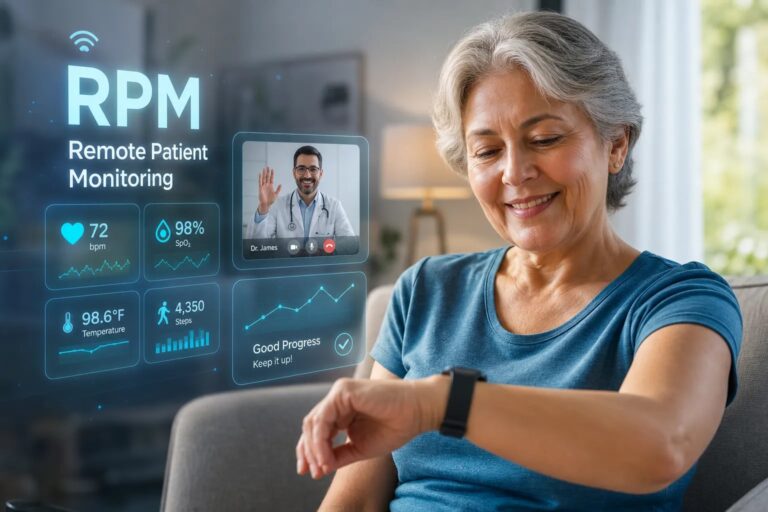
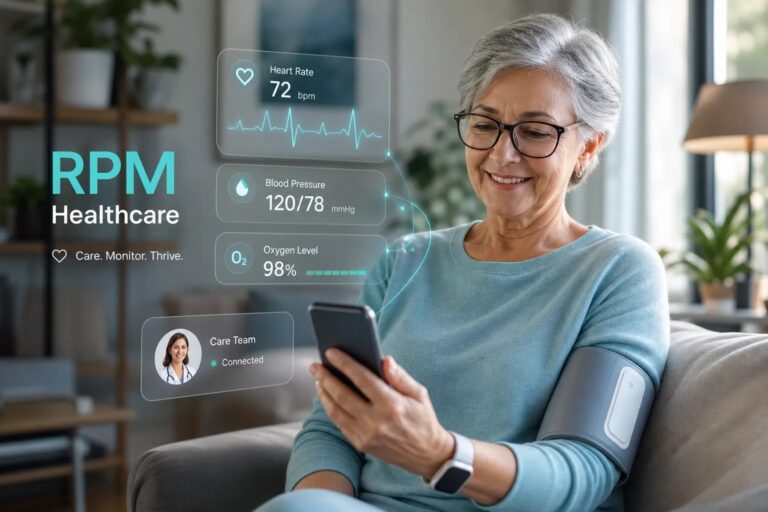
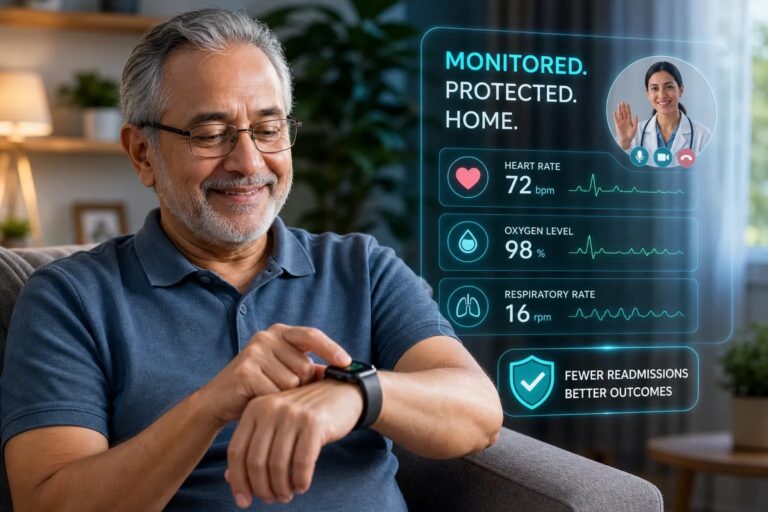
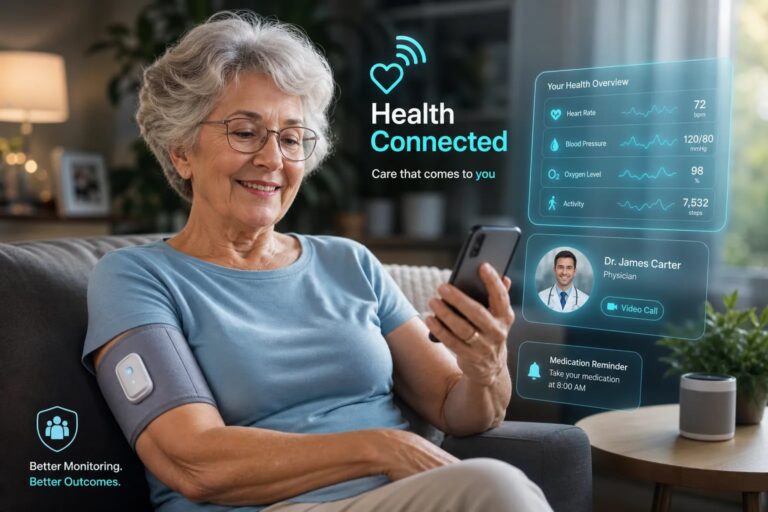
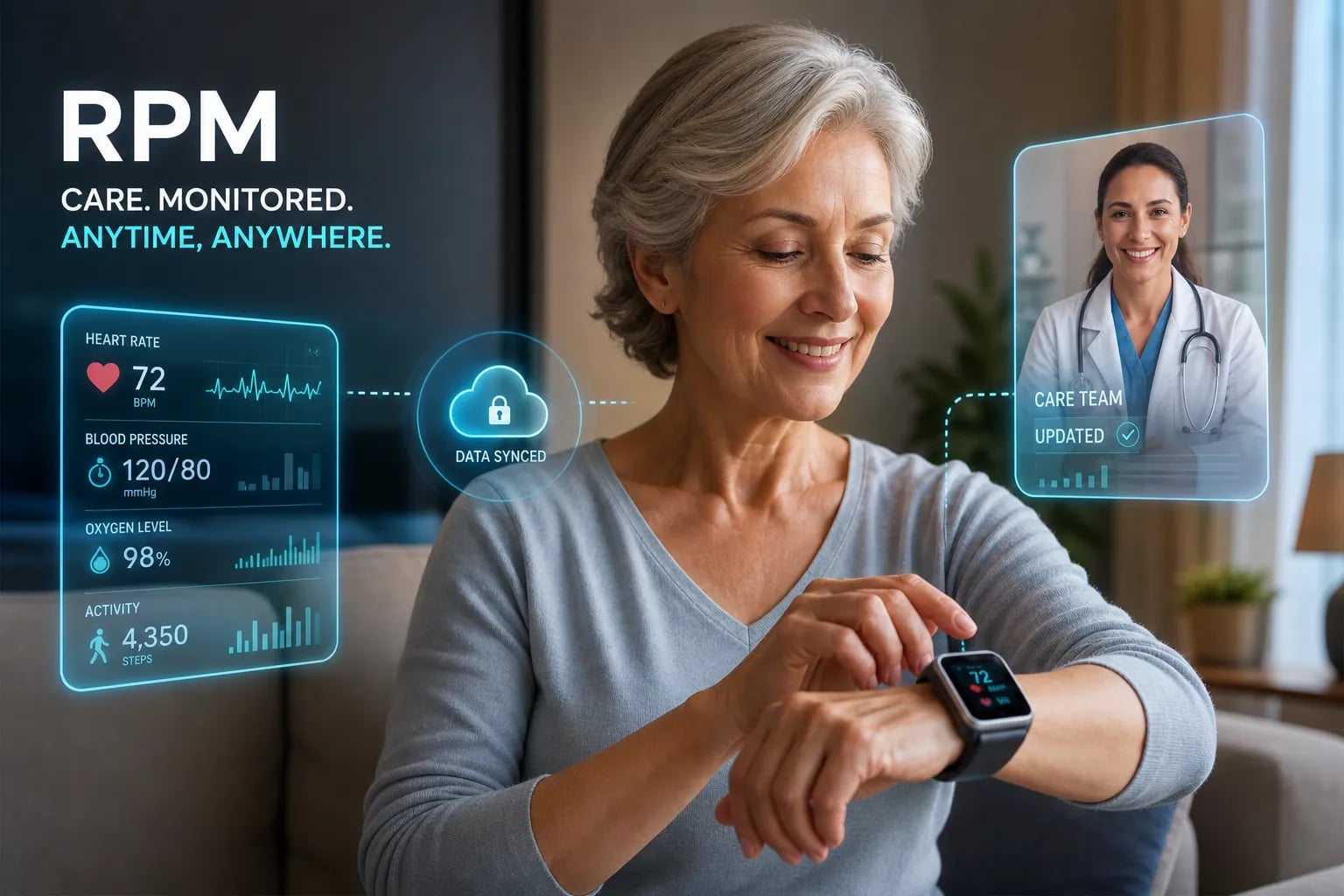
Remote patient monitoring is a system that lets connected medical devices send your health readings to a licensed care team from your home, typically on a daily basis, though frequency varies by program and condition, without a clinic visit. That single sentence is the foundation. Everything else is just the architecture built on top of it: the devices, the data, the clinical alerts, the care coordinators.
What follows is a guided walkthrough of the complete patient journey, using RemoteHCS’s nationwide infrastructure as the real-world example throughout. By the end, you’ll know exactly what happens at every step, who is watching your data, and what to do if something flags. No jargon left unexplained.
RPM explained: what “remote patient monitoring” actually means
The plain-English definition
Break the phrase apart and it tells you everything. “Remote” means from your home, your kitchen table, your couch at 7 a.m. “Patient monitoring” means a licensed clinician is tracking your readings over time, not just snapping a single measurement at one appointment and moving on. This is not a fitness tracker counting your steps. It is a clinical-grade telemonitoring system built specifically for chronic health conditions.
It also helps to know what RPM is not. It is not on-demand urgent care for a sudden illness. It is not a video call replacement for your primary care physician. It is not a consumer wellness app that shows you colorful charts and leaves you to interpret them alone. Remote patient monitoring sits between your regular appointments as a continuous safety net, operating every day whether you feel fine or feel off.
Which conditions RPM is built to manage
RPM is designed for conditions that change daily: hypertension, diabetes, heart failure, COPD, kidney disease, asthma, and post-surgical recovery. These aren’t conditions you check once a month and forget. They shift with diet, activity, medication timing, stress, and sleep. A single clinic visit every 90 days captures a snapshot. Remote monitoring captures a film.
For patients managing two or more chronic conditions simultaneously, this daily visibility is especially critical. A blood pressure spike can signal kidney stress before any physical symptom appears. In heart failure patients, gradual weight gain is a known early indicator of fluid retention, often preceding overt symptoms by a day or more, giving clinicians time to intervene before a hospital visit becomes necessary. RPM catches those early signals while there is still a window to act.
How it differs from a standard telehealth visit
A telehealth visit is a scheduled event. You feel something, you book a call, you talk to a clinician for fifteen minutes, and then the connection ends. Remote patient monitoring is always on. That distinction matters more than it sounds: one approach is reactive, the other is proactive. The RPM program flags a number before you feel anything, and the care team acts on that signal before you need to call anyone.
This is the core value proposition of a well-designed RPM program: continuity of care between visits, not replacement of them. Your physician still plays the central role, reviewing trend data, adjusting care plans, and making clinical decisions. RemoteHCS extends that physician’s reach into the days and weeks between appointments, so nothing falls through the gap.
RPM explained, Step one: enrollment and getting your devices set up
Who qualifies and how the process begins
Enrollment typically starts with a referral from your physician or through a direct intake process with an RPM provider. Medicare has covered remote patient monitoring since 2018 through CMS, which means most Medicare-eligible patients with a qualifying chronic condition can access RPM services at little to no out-of-pocket cost. The CPT codes that govern this coverage, 99453, 99454, 99457, and 99458, cover everything from device setup to monthly clinical management time.
At RemoteHCS, the intake process starts with a care coordinator who contacts the patient or caregiver directly to confirm the qualifying condition, verify insurance coverage, and walk through the RPM program in plain language before anything ships. Coverage is clarified upfront so patients understand what they’re enrolling in before making any commitment.
What devices arrive and why each one matters
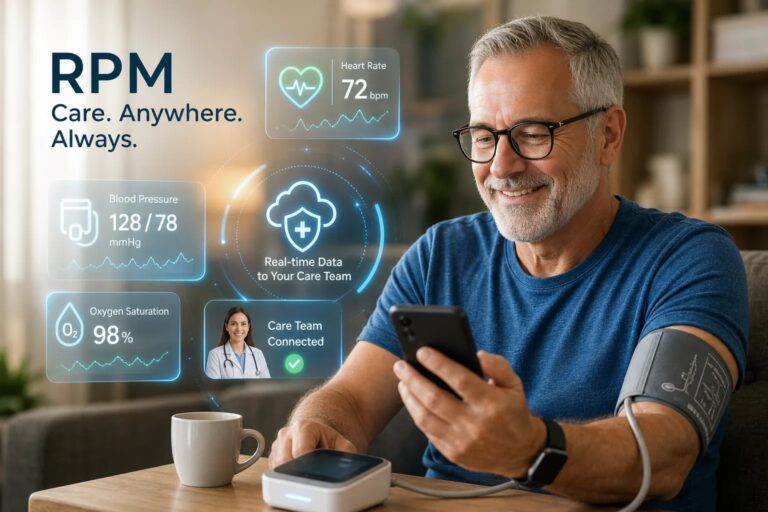
Devices are matched to the condition being monitored. A hypertension patient receives a Bluetooth-enabled blood pressure cuff. A diabetes patient gets a connected glucometer. A COPD patient receives a pulse oximeter to track SpO2 levels. Heart failure patients often receive a connected weight scale, because weight changes are a recognized early warning sign of fluid retention, frequently preceding respiratory symptoms, giving clinicians time to adjust the care plan proactively.
Many RPM programs ship devices pre-configured so patients don’t need to create an account, pair the device to an app manually, or troubleshoot a Bluetooth connection. The device arrives ready to take a reading and transmit it automatically. Setup friction is one of the most common reasons patients abandon RPM programs, and eliminating that friction on day one is a deliberate design choice.
What device onboarding looks like on day one
A care coordinator walks the patient or caregiver through a brief onboarding call. It covers how to take the reading correctly, how often to submit it, and how to confirm the transmission was received. Readings are generally fast, often just a few minutes from device to data sent, depending on device type and connectivity. There is no technical knowledge required.
The monitoring cadence is set during this call and stays consistent. Blood pressure, for example, is commonly measured once daily at the same time of day, though clinical protocols vary. That consistency is what transforms raw numbers into meaningful trend data. A single high reading tells you little; a pattern of high readings at the same time of day tells a clinical story.
How your daily readings travel from home to your care team
The data transmission path, explained simply
When a patient completes a reading, the connected device transmits the measurement over a cellular or Bluetooth connection to a HIPAA-encrypted platform. For most cellular-enabled devices, no Wi-Fi password is required. The cellular modem is built into the device itself, so the transmission happens automatically over a carrier network the moment the reading is complete.
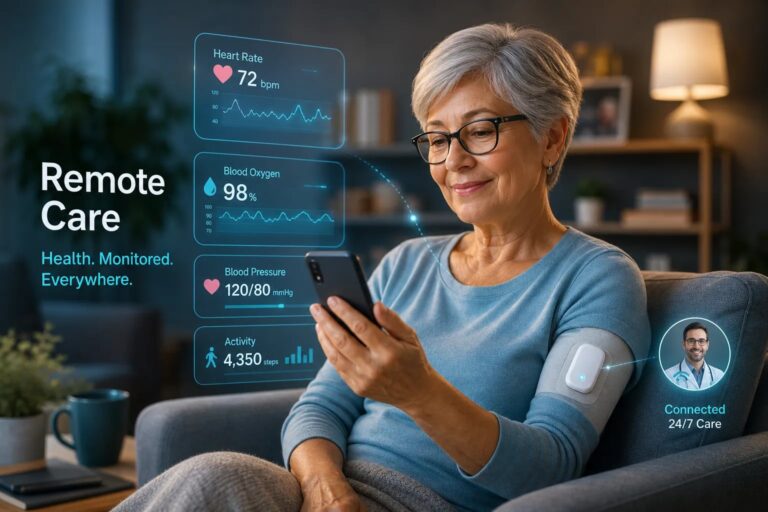
The data lands on the care team’s monitoring dashboard in near real time, typically within seconds to minutes, depending on connectivity and device type. A clinician or care coordinator can see today’s blood pressure reading, compare it against the previous 30 days, and identify a developing trend before it becomes a clinical emergency. That speed is what separates meaningful remote monitoring from passive data collection.
What the clinician’s patient dashboard actually shows
The care team sees a timeline of readings organized by patient, date, and vital type. Readings within normal range appear clearly; readings outside the patient’s personalized threshold are flagged immediately for review. These thresholds are not generic population averages. They are calibrated to each patient’s history and physician-defined parameters, so a reading that is acceptable for one patient may still trigger a clinical alert for another based on their individual baseline.
Think of it as condition-specific monitoring rather than generic wellness tracking. The clinical team isn’t staring at a wall of numbers, they’re reviewing a curated, prioritized feed of the patients who need attention right now. For a patient managing both diabetes and hypertension, for instance, “curated” means the dashboard surfaces readings where those two conditions may be interacting, not just individual out-of-range values in isolation.
How your health information stays protected
HIPAA requires that protected health information be encrypted in transit and at rest, and that vendors maintain business associate agreements (BAAs) with covered entities. Reputable RPM platforms follow this framework, with modern encrypted transport protocols, specifically TLS 1.2 and above, as recommended by HHS guidance, governing data movement across carrier networks and platform servers.
Patients receive a plain-language privacy notice during enrollment that explains exactly who has access, under what circumstances, and for how long records are retained. Under 45 CFR § 164.530(j), covered entities are required to retain HIPAA-related policies for a minimum of six years, giving patients a durable record of their monitoring history. RemoteHCS’s specific data practices are detailed in its privacy policy and BAA documentation, which the care coordinator reviews with patients during intake.
RPM explained: what happens when your numbers raise a red flag
How automated alerts are triggered
Each patient has a personalized threshold set by their care team before monitoring begins. When a reading falls outside that range, the platform generates an automated alert and routes it to the clinical team immediately. A blood pressure reading above 160/100, a SpO2 reading below 90%, a weight gain of more than three pounds in 24 hours: each of these can fire an alert based on the patient’s specific parameters.
Some platforms use tiered alert logic, where more severe deviations generate higher-priority notifications with faster response requirements. Repeated abnormal readings across multiple sessions can also trigger escalation, helping distinguish a genuine deterioration trend from a single noisy measurement.
The clinical escalation process, step by step
Tier 1: A care coordinator reviews the alert and reaches out to the patient by phone or secure message to verify the reading. High readings sometimes reflect measurement error, temporary stress, or technique issues with the device. A brief check-in resolves many alerts before they require further action.
Tier 2: If the reading is confirmed and clinically significant, the coordinator escalates to the supervising clinician. The clinician reviews the trend data rather than the single reading in isolation and may adjust the care plan, coordinate a medication review with the prescribing physician, or schedule a virtual consultation to assess the patient directly.
Tier 3: If readings suggest an emergency, chest pain combined with severely elevated blood pressure and an elevated heart rate, for example, the protocol instructs the patient to call 911 or go to the nearest emergency room immediately. The system does not delay or buffer critical events.
What the patient experiences during an escalation
From the patient’s side, an escalation begins with a phone call or a secure message from a real person. That person explains what the care team noticed, what it might mean, and what the patient should do next. The clinical interpretation and the action step arrive together, clearly communicated. This is the defining difference between an RPM program and a passive health app: someone is always on the other side of the data.
Staying connected between alerts through messaging and check-ins
Secure messaging and virtual consultations
Outside of alert situations, patients can send questions, report new symptoms, or flag concerns through a HIPAA-compliant secure messaging portal at any time. This replaces the frustrating cycle of leaving voicemails for nurse lines and waiting days for a callback. Messages reach the care team directly, and the program’s standard of care calls for clinical follow-up rather than automated acknowledgments, though specific response timelines vary by program SLA.
When a question warrants a face-to-face conversation, a virtual consultation can be scheduled through the platform without navigating a separate telehealth app. The care coordinator facilitates the handoff, keeping the experience seamless for patients who aren’t comfortable managing multiple digital tools.
Medication adherence support and wellness check-ins
Care coordinators conduct regular check-ins that go beyond the vital sign numbers. These calls address medication adherence, lifestyle factors, and how the patient is feeling day to day. For patients managing multiple chronic conditions, these check-ins may surface drug interaction concerns or side effects before they become clinical events, patients are often more likely to mention something informally during a routine call than to schedule a separate appointment to report it.
These conversations are also the relational foundation of long-term RPM engagement. Patients who feel heard and supported stay enrolled. Patients who feel like they are submitting data into a void do not. The human element in a remote monitoring program is not secondary to the technology; it is what makes the technology work.
How to get started with RemoteHCS
Who RemoteHCS serves and where
RemoteHCS is preparing to enroll patients across all 50 states, with a focus on chronic conditions that require daily management: hypertension, diabetes, heart failure, COPD, kidney disease, and post-surgical recovery. The service is specifically designed for patients who find frequent in-person visits difficult, whether because of rural geography, limited mobility, or the complexity of managing multiple conditions at once.
The goal of a nationwide RPM model is to ensure that patients in underserved or geographically remote areas can access the same quality of clinical monitoring as patients in major metro areas. Geography should not determine the quality of monitoring a patient receives, and the connected-device infrastructure that underpins RPM makes that standard achievable at scale.
What Medicare coverage means for your costs
As noted in the enrollment section above, Medicare has covered RPM services since 2018 under billing codes that reimburse for device supply, setup, and monthly clinical management time. For most Medicare-eligible patients with a qualifying chronic condition, this means the program is accessible at little to no out-of-pocket cost. The 2026 national Medicare reimbursement averages for core RPM codes range from approximately $22 for initial device setup (99453) through approximately $52 for monthly monitoring management time (99457), figures drawn from the 2026 Medicare Physician Fee Schedule. Patients should verify their specific coverage with their care coordinator, as individual plan terms vary.
RemoteHCS care coordinators walk every patient through their specific coverage during the enrollment call. The coverage conversation happens before anything ships, so there are no billing surprises after the devices arrive.
Joining the waitlist and what to expect
RemoteHCS is currently in a pre-launch waitlist phase. Joining is straightforward and positions you to be among the first patients enrolled in your state when services go live. After joining, a care coordinator will reach out to confirm your condition, review your insurance coverage, and answer any questions before you commit to anything.
The process is designed to remove every barrier between a patient with a chronic condition and the daily monitoring that keeps them out of the hospital. You do not need to figure out the technology, decode the billing, or navigate the enrollment paperwork alone. That is exactly what the care team is there for.
The complete picture: what RPM delivers every day
RPM explained in full means following the entire patient journey: from enrollment and device onboarding, through daily readings that flow securely to a licensed care team, to automated clinical alerts that trigger a real human response, to secure messaging that keeps you connected between every data point. Each step is designed to work without requiring technical expertise from the patient.
Remote patient monitoring is not a replacement for your physician. It is an extension of the care they already provide, now operating every day rather than only on appointment days. The clinical relationship stays at the center; the connected-device infrastructure fills in the gaps between visits.
If you or someone you care for is managing a chronic condition, the first step is joining the RemoteHCS waitlist. A care coordinator will reach out, handle the coverage verification, match the right devices to your condition, and walk you through everything before your first reading. The hard part is deciding to start, and that decision begins with a single form.